 Update History
 2024-01-26 11:15:52
Women\'s Health majorpublished

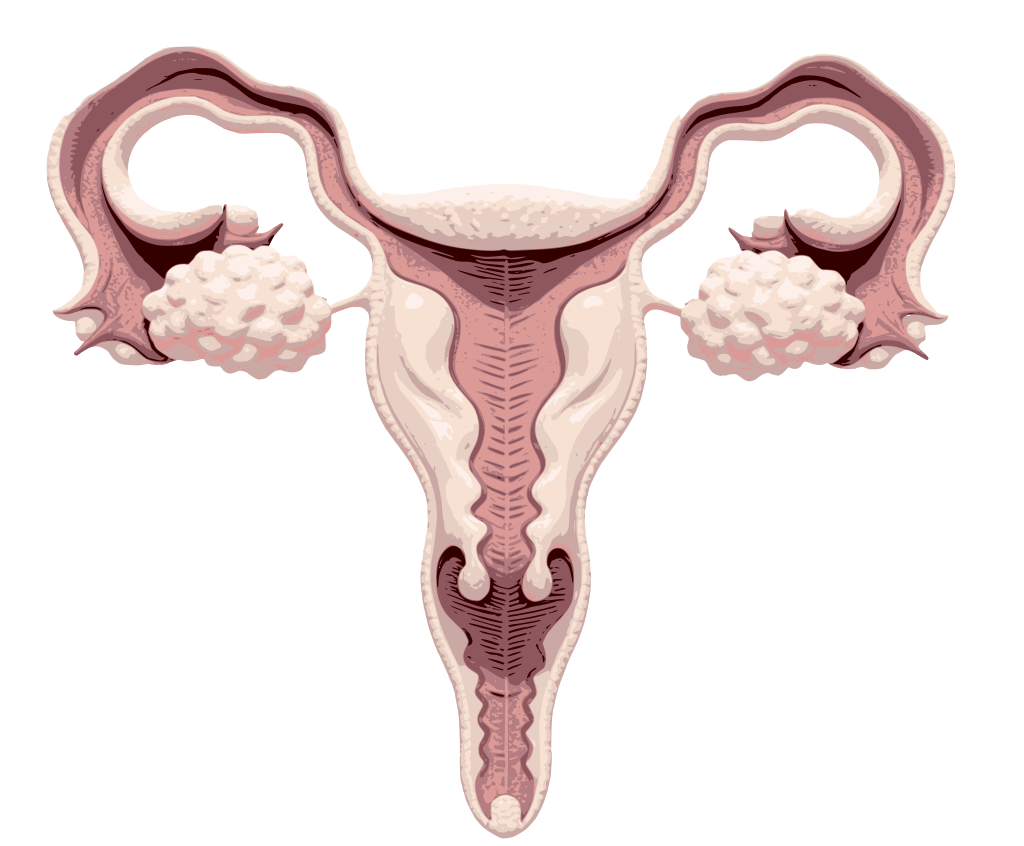
Women’s health includes conditions like hormonal disorders, infertility, menopause, and reproductive cancers. Emerging research shows the microbiome plays a key role in disease development and treatment. MicrobiomeSignatures.com investigates condition-specific microbiome signatures to uncover disease causes and develop targeted microbiome-based therapies.
Women’s health, a vital aspect of medical science, encompasses various conditions unique to women’s physiological makeup. Historically, women were often excluded from clinical research, leading to a gap in understanding the intricacies of women’s health needs. However, recent advancements have highlighted the significant role that the microbiome plays in these conditions, offering new insights and potential therapies. MicrobiomeSignatures.com is at the forefront of exploring the microbiome signature of each of these conditions to unravel the etiology of these diseases and develop targeted microbiome therapies.

Microbiome Signatures identifies and validates condition-specific microbiome shifts and interventions to accelerate clinical translation. Our multidisciplinary team supports clinicians, researchers, and innovators in turning microbiome science into actionable medicine.

Women’s health, a vital aspect of medical science, encompasses various conditions unique to women’s physiological makeup. Historically, women were often excluded from clinical research, leading to a gap in understanding the intricacies of women’s health needs. However, recent advancements have highlighted the significant role that the microbiome plays in these conditions, offering new insights and potential therapies. MicrobiomeSignatures.com is at the forefront of exploring the microbiome signature of each of these conditions to unravel the etiology of these diseases and develop targeted microbiome therapies.
Women’s health involves a spectrum of conditions ranging from breast and cervical cancers to hormonal disorders like polycystic ovary syndrome (PCOS) and menopause. It also covers issues such as infertility, dysmenorrhea, and various sexual health concerns. While most research historically has focused on cisgender women, the scope of study often extends to transgender and nonbinary individuals, particularly concerning conditions related to shared biological structures.
For specific women’s health concerns, consulting an obstetrician/gynecologist (OB/GYN) is recommended. These specialists focus on the female reproductive system, pregnancy, and overall women’s health. However, women may seek care from various specialists for other health issues.
Regular health screenings like Pap smears, bone density tests, breast exams, and immunizations are crucial for early detection of potential health problems. The frequency of these screenings varies based on age, health history, and individual risk factors.
Women’s health issues are sometimes underdiagnosed due to historical underrepresentation in medical research. For example, heart attack symptoms in women can be subtler compared to men, often leading to delayed diagnosis and treatment. Thus, increased representation in research is essential for better health outcomes.
The microbiome’s role in women’s health is a groundbreaking study area. MicrobiomeSignatures.com is dedicated to understanding the microbiome signature in conditions like Bacterial Vaginosis, Breast Cancer, Cervical Cancer, Endometriosis, PCOS, Menopause, Infertility, and others. By analyzing these signatures, we aim to unlock a better understanding of the diseases’ etiology and develop targeted microbiome therapies.
| Condition/Goal | Status |
|---|---|
| Bacterial Vaginosis (BV) | Unfinished |
| Breast Cancer | Unfinished |
| Breast Engorgement | Unfinished |
| Breast Pain | Unfinished |
| Cellulite | Unfinished |
| Cervical Cancer | Unfinished |
| Endometrial Cancer | Unfinished |
| Endometriosis | Finished |
| Female Sexual Dysfunction | Unfinished |
| Hormone Health | Unfinished |
| Hot Flashes | Unfinished |
| Hypoactive Sexual Desire Disorder | Unfinished |
| Infertility | Unfinished |
| Mastitis | Unfinished |
| Menopausal Symptoms | Unfinished |
| Menopause | Unfinished |
| Menstrual Health | Unfinished |
| Ovarian Cancer | Unfinished |
| Polycystic Ovary Syndrome (PCOS) | Unfinished |
| Premenstrual Dysphoric Disorder (PMDD) | Unfinished |
| Premenstrual Syndrome (PMS) | Unfinished |
| Primary Dysmenorrhea (Menstrual Cramps) | Unfinished |
| Primary Ovarian Insufficiency | Unfinished |
| Rett Syndrome (RTT) | Unfinished |
| Sexual Dysfunction | Unfinished |
| Sexual Health | Unfinished |
| Subfertility | Unfinished |
| Takayasu’s Arteritis | Unfinished |
| Vaginal Health | Unfinished |
| Vulvovaginal Candidiasis (Yeast Infection) | Unfinished |
Women’s health is a complex and multifaceted field. By delving into the microbiome’s role, MicrobiomeSignatures.com aims to contribute significantly to understanding and treating women’s health conditions. This approach could revolutionize how we view and manage these conditions, leading to more effective and personalized treatments. As we continue to explore these connections, our goal is to enhance health outcomes and quality of life for women worldwide.
2024-01-26 11:15:52
Women\'s Health majorpublished
Polycystic ovary syndrome (PCOS) is a common endocrine disorder that affects women of reproductive age, characterized by irregular menstrual cycles, hyperandrogenism, and insulin resistance. It is often associated with metabolic dysfunctions and inflammation, leading to fertility issues and increased risk of type 2 diabetes and cardiovascular disease.
Infertility is the inability to conceive after 12 months of regular, unprotected sex. It affects both men and women and can be due to various physical, hormonal, or genetic factors. Treatments include medication, surgery, assisted reproductive technologies, and lifestyle changes.
Primary dysmenorrhea (PD) is painful menstrual cramps without underlying pelvic pathology, predominantly caused by elevated prostaglandins inducing uterine contractions and ischemia. Managing primary dysmenorrhea (PD) requires understanding its complex mechanisms involving prostaglandins, oxidative stress, and inflammation. Treatments include NSAIDs, hormonal therapies, and promising complementary options like probiotics, vitamins, omega-3 fatty acids, exercise, yoga, acupuncture, and massage, significantly improving women's quality of life.
Bacterial vaginosis (BV) is caused by an imbalance in the vaginal microbiota, where the typically dominant Lactobacillus species are significantly reduced, leading to an overgrowth of anaerobic and facultative bacteria.
Traditionally linked to genetic predispositions and environmental exposures, emerging evidence highlights the microbiome as a critical and underappreciated factor influencing breast cancer progression, immune response, and treatment outcomes.
Endometriosis involves ectopic endometrial tissue causing pain and infertility. Validated and Promising Interventions include Hyperbaric Oxygen Therapy (HBOT), Low Nickel Diet, and Metronidazole therapy.
Endometriosis involves ectopic endometrial tissue causing pain and infertility. Validated and Promising Interventions include Hyperbaric Oxygen Therapy (HBOT), Low Nickel Diet, and Metronidazole therapy.
Endometriosis involves ectopic endometrial tissue causing pain and infertility. Validated and Promising Interventions include Hyperbaric Oxygen Therapy (HBOT), Low Nickel Diet, and Metronidazole therapy.