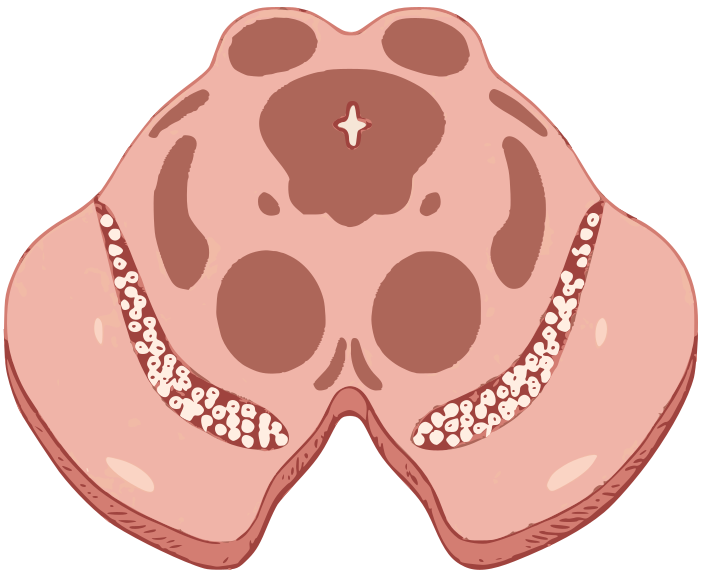
Parkinson’s disease is increasingly recognized as a systemic disorder involving coordinated disturbances across the gut–brain axis, rather than a condition confined to dopaminergic neurodegeneration alone. Converging evidence implicates gut dysbiosis, altered microbial metabolites, impaired intestinal barrier integrity, and metal dyshomeostasis as upstream drivers of neuroinflammation and alpha-synuclein pathology. These interconnected microbiome, metabolomic, and metallomic signals provide a mechanistic framework for understanding disease initiation, progression, and therapeutic targeting beyond the central nervous system.
